









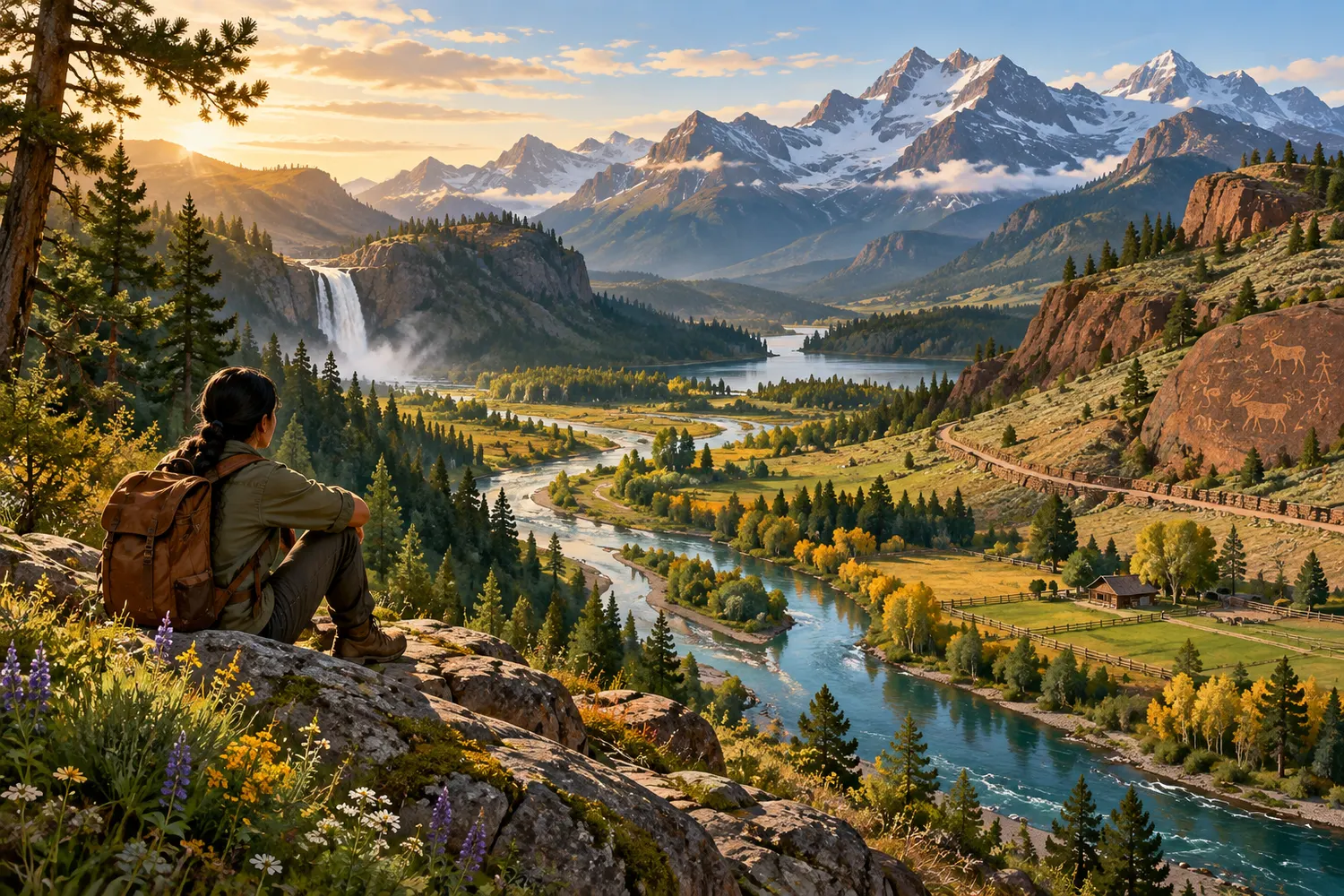
A visitor entering a protected forest may see a landscape free of people and describe it as untouched. That impression can conceal a long history of paths, seasonal use, burning, planting, or care by people who once lived there or still do. The word 'wild' can describe an ecological quality, but it can also be a claim about whose presence counts. If a conservation plan begins by imagining that protection requires the absence of local residents, it may misread both the landscape and the responsibilities attached to it. The difficult task is to protect habitats while taking seriously the rights and knowledge of those whose lives have been shaped by them.
The urgency of protection is real. Habitat loss, hunting pressure, invasive species, pollution, and changing climate can damage populations that cannot recover on an election cycle. Some activities must be restricted if a species or ecological process is to survive. But deciding which activities are harmful requires evidence. Small-scale seasonal collection does not necessarily have the same effect as commercial extraction, and a road that fragments habitat differs from a footpath used for generations. A rule broad enough to stop every kind of use may be easy to announce and hard to justify. Specificity makes protection more credible.
Local knowledge can add a different timescale to scientific surveys. People who travel a landscape regularly may notice where water persists in dry periods, when particular plants flower, or how animal movement changes after a fire. This knowledge is neither uniform nor infallible. People can disagree, incentives can shape what is reported, and environmental conditions may change faster than remembered patterns. Scientific methods can also miss what they were not designed to measure. A productive partnership treats each source as capable of testing the other instead of assigning automatic superiority to either a field notebook or an inherited practice.
Participation is frequently promised and weakly delivered. A meeting held after boundaries have been fixed may allow residents to voice concerns without influencing the decision. Translation, travel costs, notice periods, and the authority to propose alternatives determine whether participation is meaningful. Whose voice represents the community is another question. Landowners, women collecting resources, seasonal workers, and young people may experience restrictions differently. A conservation agreement made with a few visible leaders can overlook those who will carry much of its cost. Process is not a decorative addition to ecological goals; it affects whether rules can be understood, trusted, and sustained.
The language of compensation can also narrow the issue. A payment may address lost income from restricted access, but it may not replace a place of cultural importance or a practice through which people teach children about their surroundings. Nor should cultural value automatically defeat every ecological concern. The point is that a decision needs to state which interests are involved rather than pretending that all can be converted into one price. In some cases access can be redesigned; in others a restriction may still be necessary, accompanied by clear justification and fair support for affected people.
Tourism can make a protected area politically popular and financially valuable. It can also concentrate traffic, waste, and construction around fragile places. A visitor may be welcomed to photograph wildlife while a nearby resident is denied a familiar livelihood. This asymmetry demands explanation. Revenue-sharing, visitor limits, and locally meaningful employment can help, but only if they address actual power over decisions. A few jobs cannot automatically offset the loss of control over land. The test is whether conservation's benefits and duties are distributed deliberately rather than according to who had the strongest voice when rules were written.
There are cases where human intervention has sustained the conditions that a species needs. Some grasslands require disturbance to prevent a change in vegetation; in particular settings, grazing or carefully managed fire can be part of that disturbance. Elsewhere the same activity at a different intensity can cause degradation. This is why slogans about 'leaving nature alone' or 'using nature sustainably' are inadequate by themselves. Managers need to know the history of a site, the mechanisms involved, and the evidence that a chosen practice is helping. A landscape can be both ecologically valuable and historically shaped by people.
Conflict with wildlife presents another test of fairness. Protecting a predator or large herbivore may bring benefits appreciated by a distant public, while farmers near the habitat face damaged crops or livestock losses. Quick compensation can reduce the burden, but prevention, reliable reporting, and locally workable responses matter too. The public that values a species should share the costs of living beside it. Expecting a small group of residents to absorb those costs in silence is unlikely to create lasting support and is difficult to defend as a matter of justice.
The most durable arrangements make monitoring and revision possible. If an access rule does not protect the intended habitat, or if it causes severe unintended harm, authorities should be able to change it. Shared monitoring can help residents see what protection achieves and help managers detect problems earlier. Transparent records can make disagreements about evidence more productive. This does not mean every demand can be satisfied or that a biological limit can always be negotiated away. It means decisions should remain accountable to both ecological outcomes and the people whose choices they constrain.
Calling a place wild need not require us to erase its human history. It can express respect for forms of life that do not exist for our convenience, while acknowledging that protection is a social decision made through institutions. The question is who has the right to decide what the landscape should become and who must live with the answer. Good conservation does not dissolve that question in a beautiful photograph. It faces it directly, because habitats are more likely to endure when the rules meant to protect them are ecologically grounded and publicly defensible. That means being honest about the cost of restriction as well as the damage that unrestricted use might cause. Neither side of the ledger disappears when a boundary is drawn.