









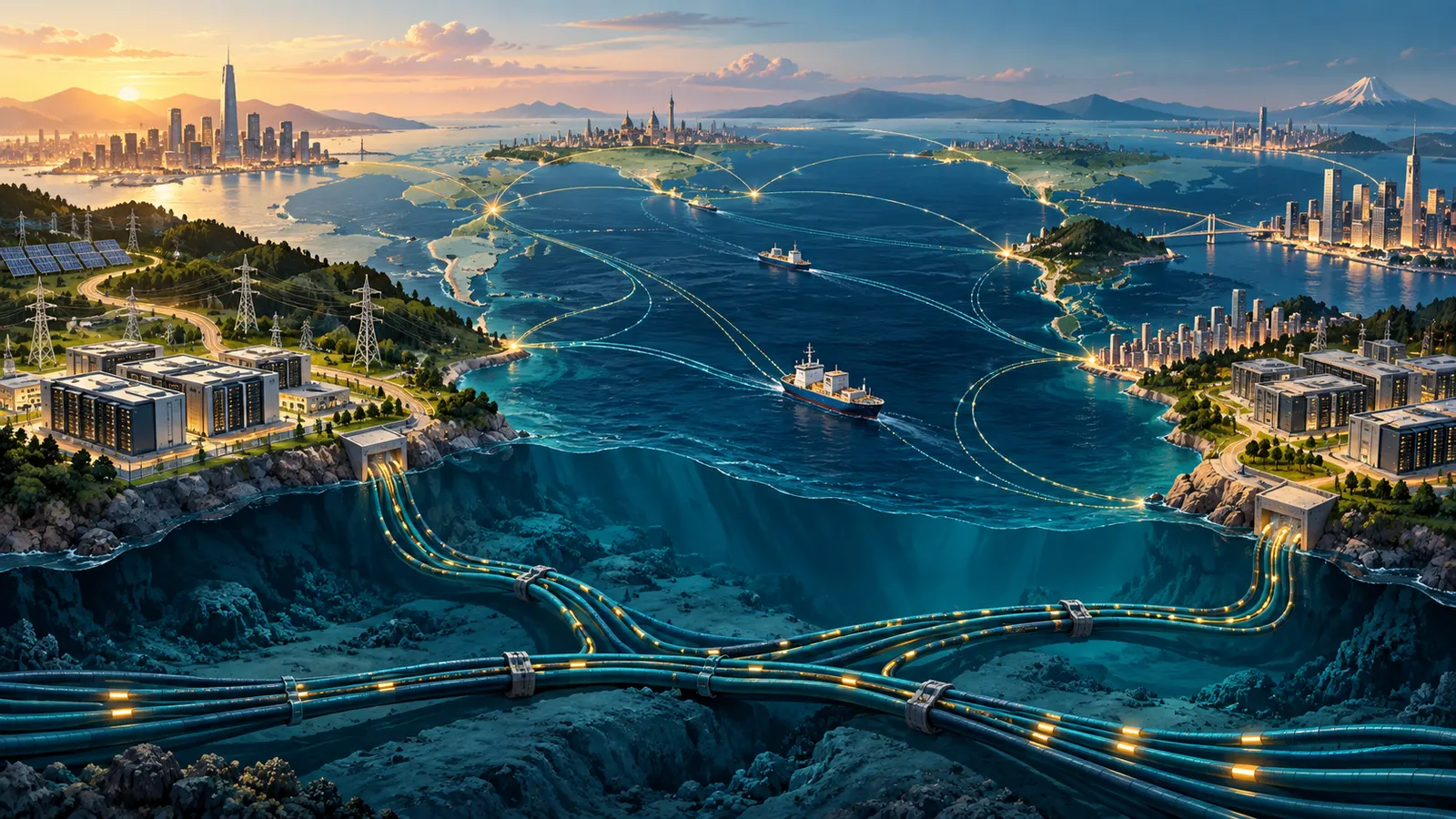
The internet is often described as a cloud, a word that suggests weightlessness and freedom from place. Yet every message depends on physical arrangements: devices require electricity, data move through cables and radio signals, and servers occupy buildings somewhere. The metaphor is convenient because users rarely need to see this infrastructure. It becomes misleading when decisions about access, resilience, and control are discussed as if digital services floated beyond geography.
Imagine sending a photograph to a friend. The gesture appears instantaneous, but the image is encoded, transmitted through a network of connected systems, stored or processed at various points, and reconstructed on another device. The precise path depends on the service and network conditions. The user does not need to understand each stage to send the photograph, just as a passenger need not understand an engine to board a train. But the hidden stages determine whether the service is reliable and who has power over it.
The dependence becomes visible during a disruption. A damaged cable, power failure, or overloaded network can interrupt services far from the place where the problem began. The disruption reveals connections that normal operation concealed. A local business may discover that its payments, customer records, and delivery arrangements all rely on a few remote systems. Digital convenience often concentrates functions that were previously separated, creating efficiency and new points of failure at the same time.
Physical location matters to speed. Signals take time to travel, and data may have to pass through several systems before reaching a user. A service serving a distant audience may place copies of commonly requested material closer to that audience. This can reduce delays, but it also requires choices about where information is stored and how it is updated. The seamless experience on a screen is the result of considerable planning about distance and duplication.
Location also matters to governance. Data held in one country may be subject to a different set of rules from data held in another. A company may operate globally while its facilities and obligations remain situated. Debates about privacy and sovereignty are therefore not purely abstract disputes about information. They concern where records travel, which institutions can obtain access, and who is responsible when a rule is violated. The cloud has borders even when an application does not display them.
The material basis of the internet has environmental consequences too. Servers and networks consume resources, while devices require materials, manufacturing, and eventual disposal. This does not mean that digital activity is inherently worse than the activities it replaces. A video meeting may avoid a journey; a poorly designed service may create other waste. The sensible comparison considers the whole chain of effects rather than treating a digital action as either immaterial or automatically harmful.
Access is shaped by geography in another way. A student with a reliable connection can attend a class, download a large file, and ask a question in real time. A student with intermittent service may receive the same link but not the same opportunity. Formal availability is not identical to practical access. Device quality, electricity, data costs, language, and technical support all affect what a connection enables. A map showing where coverage exists may hide the quality of the experience within that coverage.
Infrastructure can be made resilient through redundancy: alternative routes, spare capacity, backup power, and procedures for recovery. But redundancy costs money and can be difficult to justify during years when nothing goes wrong. Its value becomes obvious only when an ordinary route fails. This is a recurring difficulty in public planning. A bridge, water system, or network is judged during smooth operation, while the investments that prevent breakdowns remain mostly invisible.
The people maintaining digital services are similarly easy to overlook. Engineers repair failures, technicians install equipment, cleaners maintain facilities, and workers answer complaints from users. Calling a service automated does not erase the labour that keeps it functioning. It changes where labour appears in the user's field of vision. A useful question about any supposedly effortless technology is whose effort has been relocated out of sight.
The cloud metaphor is not worthless. It helps us use shared computing resources without imagining every wire and machine. But metaphors become dangerous when they prevent the questions they were meant to simplify. Where is the system located? What happens when a component fails? Who can use it consistently, and who is excluded by an unreliable connection? The internet's apparent freedom from place is an achievement built from very particular places. Understanding them makes the digital world less magical and more governable.
Physical arrangements influence power as well as reliability. If a small number of firms operate essential facilities or platforms, changes to their prices and rules can affect people who never chose to deal with them directly. A shop may use one payment service because customers expect it, while a school may rely on one provider because its lessons are already built there. Switching can require training, migration, and the loss of familiar routines. Competition on a screen does not always reveal the dependencies underneath.
The resilience of a network is also a matter of coordination. A backup server is useful only if people know when and how to use it. During a failure, engineers, service staff, and affected organisations must share information quickly enough to limit harm. A technically redundant system can still fail socially if responsibility is unclear. This is why emergency planning involves practice, documentation, and honest reports of earlier incidents, not just extra hardware waiting in a room.
Digital infrastructure has a history of uneven investment. Dense areas may attract service because many customers can be reached economically, while remote areas face higher costs for each connection. Public choices can alter this pattern, but they need to account for maintenance after the initial installation. A new cable or tower is only the start of access; repairs, affordable service, and usable devices determine whether the connection remains meaningful years later.
Without maintenance, even a well-designed network can break down when people need it most.